


Imagine yourself out for a walk. You pass a shallow pond and see a small child drowning in the water. What do you do?
For most of us, the answer is simple. We have an immediate moral obligation to save the child, even if doing so means ruining our clothes, shoes, phone, watch, etc. Compared to the life of a child, our possessions have little value.
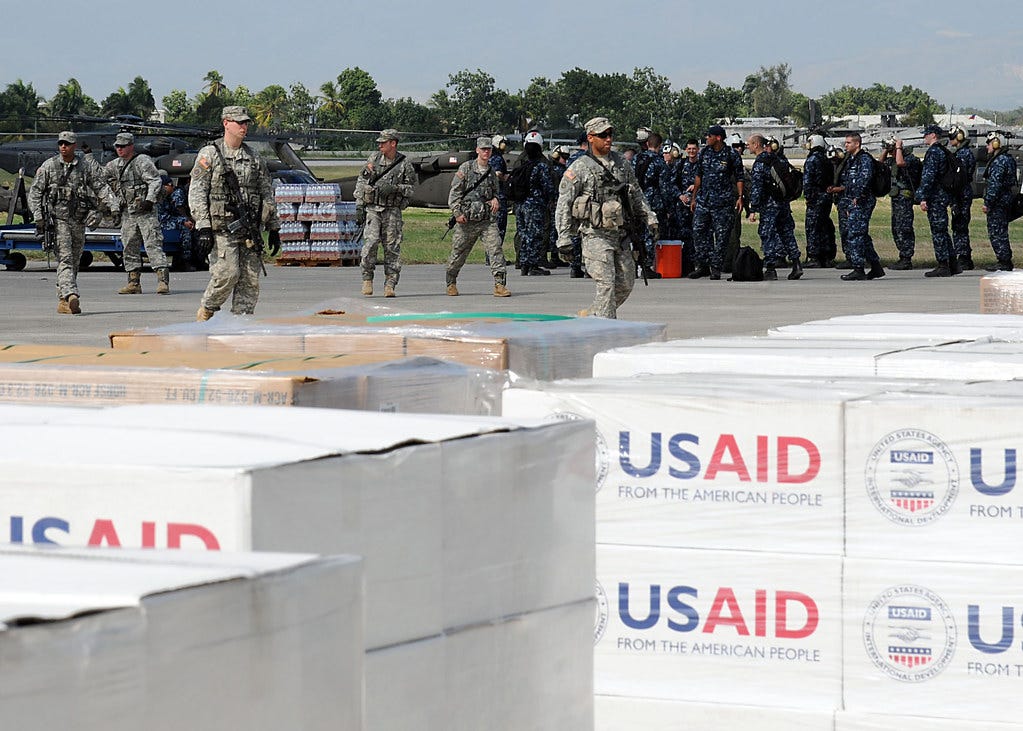
This scenario comes from a 1972 essay by philosopher Peter Singer, and it is intended to show us that the wealthy nations of the world are in the same position as the walker who discovers the drowning child. And until recently, America acted on that obligation by sending aid to many other countries, much of which was distributed by the massive USAid program, originally created by John F. Kennedy in 1961.
For decades, the United States used the USAid program not as simply a tool to feed hungry people and bring medicine to the sick, but rather as a way to develop what we call soft power. Kennedy used it to counter the rise of communism during the Cold War by creating allies of the nations most vulnerable to communist uprisings, and every president since has used it to increase America’s ability to shape and influence the behavior of entire nations, an investment that has paid for itself hundreds of times over the years.
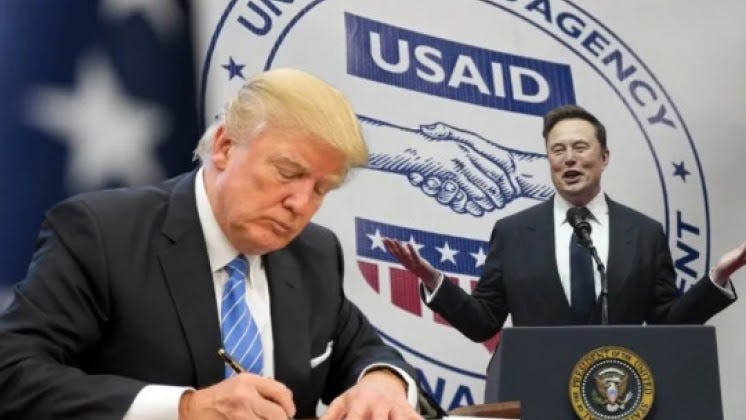
Trump, simple-minded as he is, saw USAid as nothing more than a handout to the undeserving poor, so he cut the program almost completely during the DOGE nonsense in 2025. And now that it’s gone, we’re starting to see some disturbing numbers coming from the countries no longer receiving the aid.
700,000 deaths and counting
Since early 2025, the loss of USAID funding has led to an estimated 700,000 deaths, NPR reported on July 17. By 2030, researchers estimate as many as 14 million people could die, including 4.5 million children under age 5, according to a July 2025 study in The Lancet.
So, we have established that the possible death of a single child creates a moral obligation for those who can and should intervene. So how is it that 4.5 million children are facing preventable death, yet we do not feel the need to do anything at all about it? The answer lies in a factor we have not yet discussed, and that factor is proximity. In short, the reason we don’t care about those kids is because they will die half a world away. They are not in a shallow pond as we pass by, and therefore we will not have to watch them die. Distance helps us rationalize a way to allow those deaths rather than prevent them, and this is a moral failing that we simply can’t escape.
And there are certainly other kinds of distance that factor into the problem as well. Differences in race create distance, as do language barriers, socio-economic differences, differences related to gender and sexuality, religion, etc. And while the distance created by these differences does not motivate regular Americans to actively kill, it certainly affects our willingness to let people die. Basically, in our thought experiment above, if that drowning child were far enough away, we’d just keep walking, likely with a clear conscience.
Soon, America will be in a position to restore itself as a moral actor on the world stage. We can never be perfect nor have we ever been close, but there was a time when we cared about leading the world not just economically, not just militarily, but morally as well. And make no mistake, as much as our clownish Secretary of War chirps about the power of America’s military, it’s soft power that keeps American families safe.
In the coming years, Trumpism will die, but the damage done by Trumpism will linger for generations. And if we are to repair America’s reputation on the world stage, we must restore the USAid program as quickly as we can. According to the studies, 4.5 million kids are currently drowning, and while we have the power to save them, at least at this moment, we lack the will to do so.
I want to jump in the water and ruin my shoes. Who’s with me?

Brett Pransky is a writer, a teacher, a father, and a husband, but rarely in that order. He spends his days amplifying the voices of freedom and democracy as an Editor right here at The Political Voices Network, and he spends his nights trying to fix the world one clever sentence at a time.